
Best Thermal Insulation Materials for Walls in Nepal
Compare rockwool, glasswool, EPS, XPS and reflective insulation for Nepali walls based on climate, moisture, fire performance and installation.
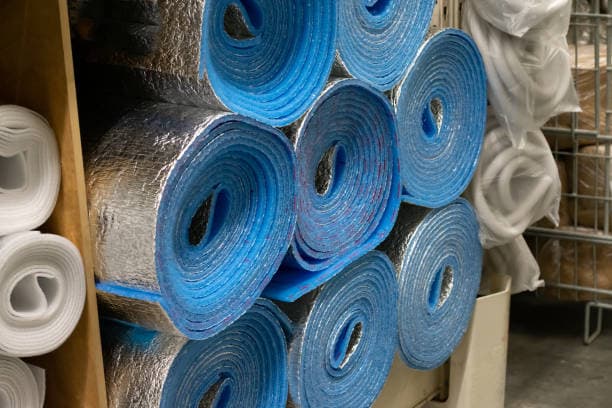
Wall insulation should be selected as part of the whole wall system, not as a stand-alone board or roll. Nepal’s hot lowlands, temperate valleys and cold mountain regions create different priorities, while moisture, fire safety, wall thickness and interior finish all influence the best solution.
Rockwool for robust wall assemblies
Rockwool or stone wool is widely used where thermal, acoustic and fire performance are all important. It fits well in framed walls, dry partitions, façades and service cavities when it is held securely and protected by the correct lining.
Its density options make it useful for both heat control and sound reduction, but the wall build-up must still manage moisture and air leakage.
Glasswool for lightweight cavities
Glasswool is a lightweight fibrous insulation commonly installed between studs, above ceilings and inside lined wall cavities. It can provide good thermal performance with low structural load when installed without gaps or excessive compression.
Use the specified thickness and density for the application, and protect the insulation from persistent moisture.
EPS for economical rigid insulation
Expanded polystyrene boards are lightweight and can be cost-effective for selected wall systems. They are easy to cut and provide continuous insulation when joints are planned properly.
Fire detailing, surface protection, adhesive compatibility and exposure conditions should be checked before using EPS in a specific assembly.
XPS for moisture-prone locations
Extruded polystyrene has a closed-cell structure that makes it useful where moisture resistance and compressive strength matter, including certain plinth, below-grade and exterior applications.
Because wall systems differ, the board should be selected with the waterproofing, finish and fire requirements in mind rather than by thickness alone.
Reflective layers need an air gap
Foil-faced or reflective insulation can help reduce radiant heat when it faces a suitable air space. Sandwiching a reflective layer tightly between solid materials reduces the benefit expected from the reflective surface.
Treat reflective insulation as one component of a roof or wall design, not a universal replacement for bulk insulation.
Installation quality controls performance
Continuous coverage matters. Small gaps around beams, columns, electrical boxes and window edges can create thermal bridges and reduce comfort. Coordinate insulation with vapour control, weather protection and interior linings before work starts.
Inspect the wall before it is closed so missing pieces, compressed batts and unsealed penetrations can be corrected.
Practical project checklist
- Identify climate zone and wall orientation.
- Confirm required thickness and available cavity depth.
- Coordinate moisture, vapour and weather-control layers.
- Check fire requirements for the complete wall assembly.
- Inspect continuity before closing the wall.
Questions to ask before you buy
- Which insulation is best for Kathmandu homes?
- Can insulation also reduce noise?
- Should insulation touch wet walls?
Final takeaway
Choose insulation by assembly performance rather than brand name alone. A correctly detailed, continuous layer that suits the climate and wall system will usually deliver more value than a thicker product installed poorly.
Need a project-specific recommendation? Send NepalBuild your quantities, location and delivery timeline on WhatsApp at +977 970 3036403. We can help you compare materials, specifications and quotation options before ordering.
Need current product prices or a project quotation?
Send your quantities, location and required delivery date. NepalBuild will help structure a comparable supplier enquiry.
Related construction guides
Insulation and Condensation in Nepal: What Builders Should Coordinate
Understand why condensation forms and how insulation, ventilation, air leakage and vapour control should be coordinated in walls and roofs.
Top 10 Best Thermal Insulation Materials for Energy-Efficient Buildings in Nepal
Compare thermal insulation for roofs, walls, ceilings, HVAC ducts and cold regions in Nepal.
Rockwool Insulation in Nepal: Thermal, Fire and Acoustic Guide
Use rockwool effectively in walls, roofs, ceilings and acoustic systems with guidance on density, thickness, fire performance, moisture and installation.